
Prime Minister Dr. Harini Amarasuriya yesterday sought to reassure Sri Lanka’s business community that the devastating impact of Cyclone Ditwah will not derail the Government’s reform programme or its medium-term economic trajectory, even as early assessments warn that the overall cost of the disaster could reach as high as 3% of GDP.
Speaking during a fireside chat at the Sri Lanka Economic Summit organised by the Ceylon Chamber of Commerce, the Prime Minister offered a candid account of the destruction, ranging from widespread flooding and infrastructure collapse to agricultural disruption and rising humanitarian needs. Yet she maintained a firm line: the country’s stabilisation agenda, outlined through the 2026 Budget and anchored on six policy pillars, remains intact.
“This catastrophe cannot push us away from the path we have set. It must strengthen our resolve,” she declared, affirming that inclusive growth, export diversification, policy sustainability, rural development, production expansion and digital transformation will continue to frame economic policy over the next year. While the 7% growth target for 2026 may undergo revisions as new data emerges, the Government remains “fully committed” to its medium-term plan.
Responding to questions from business leaders, Dr. Amarasuriya insisted that transformative reforms—including State-owned enterprise restructuring, trade facilitation initiatives, digitalisation programmes and the national single-window for investment—will not be delayed. “These are not optional extras. If we are to recover quickly, we need the right policy environment. None of these reforms will be postponed. In fact, some will move faster,” she emphasised.
Tourism, the Prime Minister noted, must remain central to economic rebuilding, urging international visitors not to cancel travel but to adjust itineraries where necessary. She stressed that many coastal areas, particularly in the South and East, remain unaffected and that several flood-hit regions would recover within weeks. “This is when we need you the most,” she said in an appeal to global travellers.
In one of the most forceful portions of her remarks, Dr. Amarasuriya linked the recurring concentration of flood damage to decades of poor land-use planning and political expediency. Pointing to heavily inundated Colombo suburbs developed on reclaimed marshland, she said the disaster was “not an accident” but the predictable outcome of systemic failures in land and urban planning.
The newly launched ‘Rebuild Sri Lanka’ initiative, she said, aims not merely to restore what has been lost, but to fundamentally overhaul the way the country approaches climate resilience: “This includes ensuring that evidence, not politics, drives land planning, infrastructure decisions and urban development.”
While official casualties remain relatively low, the human impact is profound, with communities in Matale, Kandy, Nuwara Eliya and Badulla still struggling with loss of life, homes and livelihoods. Access to several areas remains limited, complicating assessments led by the World Bank, UN agencies and bilateral partners. “Even the officials tasked with doing these assessments have themselves been affected,” the Premier noted.
Immediate Government priorities include clearing debris, reopening schools and universities, restoring power and utilities, and enabling displaced families to return home. Electricity and communication services have been restored in most districts, though pockets in the Central Province remain without power due to severe structural damage. Grants have already been announced for households to begin basic repairs, and further financial support will follow after the completion of damage assessments.
The economic toll on agriculture is significant, with the Maha season severely disrupted. Paddy, vegetables and other short-term crops have been lost, while seed stocks and irrigation systems have suffered extensive damage. Given the anticipated pressure on food prices, the Government is considering easing certain import restrictions, including quarantine regulations, in order to prevent shortages. “This is an exceptional situation. Our priority is to ensure food security and prevent scarcity,” Dr. Amarasuriya said.
The private sector, she urged, must remain committed to the country’s long-term economic direction despite current setbacks. She also called on the public and diaspora to support the Rebuild Sri Lanka Fund, emphasising its focus on resilience, inclusivity and sustainable development.
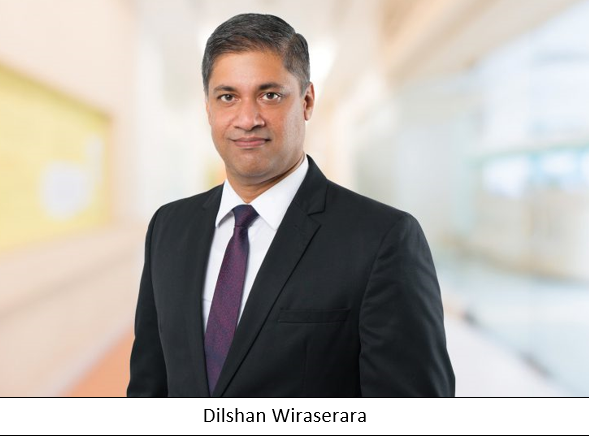
During a previous panel session, First Capital Holdings PLC Managing Director and CEO Dilshan Wirasekara warned that the economic cost of Cyclone Ditwah could range from USD 200 million to USD 2.9 billion—or between 1% and 3% of GDP—once full assessments are complete. He stressed that conventional tools used after past disasters “will not move the needle” given the scale of damage to infrastructure, agriculture, communities and logistics networks.
Wirasekara called for bold capital-market solutions, including the issuance of a large-scale, Government-backed Infrastructure Bond to finance reconstruction. He argued that investment banks should collaborate on such an issuance at zero fee, placing national interest above commercial returns. With the State still unable to access international capital markets, he said Sri Lanka must now use innovative domestic and international investor mechanisms, potentially raising between USD 30 million and USD 500 million as a starting point.
“The current crisis is the strongest justification to activate the Infrastructure Bond framework immediately,” he said, adding that foreign humanitarian support already arriving could complement such an offering.
As the country moves from emergency response to medium-term rebuilding, Dr. Amarasuriya expressed confidence that Sri Lanka would recover: “The very fact that this event is happening proves that Sri Lanka will go on, and we will welcome visitors just as warmly tomorrow as we did yesterday.”
Subscribe to our newsletter to get notification about new updates, information, etc..
